

Menu


February 1, 2026
Stavros Kostoulas
The weather is nice today!
This is an expression we hear and use in everyday conversations in our social interactions. Of course, as strange as it may sound, this is not entirely objective. Because everyone interprets good weather according to their own needs. In the forecasts announced by meteorologists, the weather can be described as clear, unstable, with strong winds, chances of rain, storms, etc. Usually, when the weather is clear, most people consider it to be good. But is clear weather good for everyone?
No, of course not, there are many examples of cases. One of them is clear weather without wind for someone who kitesurfs. It is not good, because they cannot be active. Thus, we conclude that depending on the activity someone wants to do, or the pious desires they may have, they interpret the weather differently from the general population.
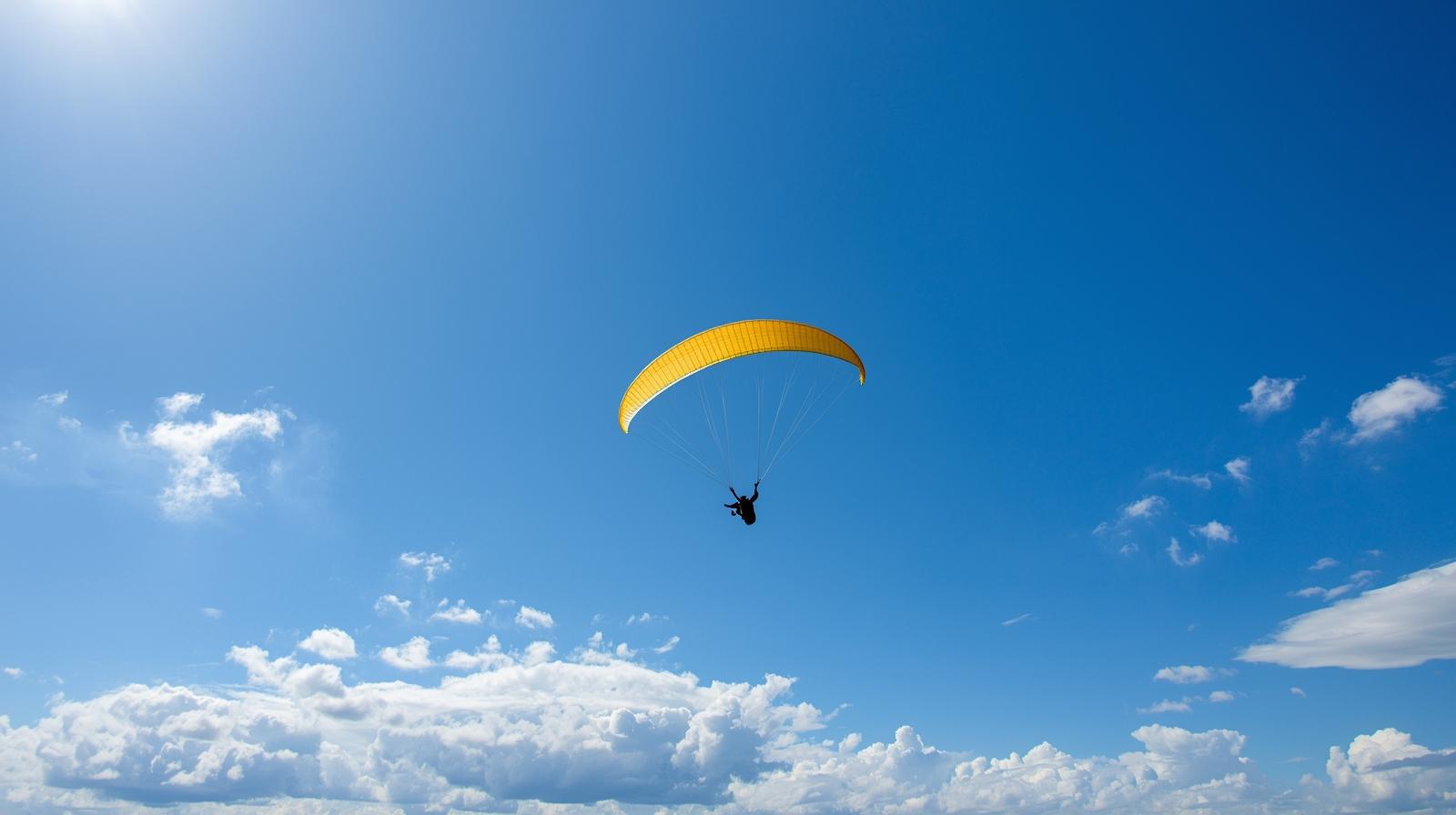
When is the weather good for paragliding?
- We're not flying today because it's too windy.
- We are not flying today as there is no wind at all (especially on short takeoff runways).
- We are not flying today; the wind is too strong for takeoff.
- We are not flying today; there is a storm developing in the area.
These are some expressions you might hear among paragliders, when someone is at a takeoff site in the mountains. But is it really that difficult to fly a parachute, you may ask. Since all this sounds so "scientific," complicated, and unfamiliar to your ears!
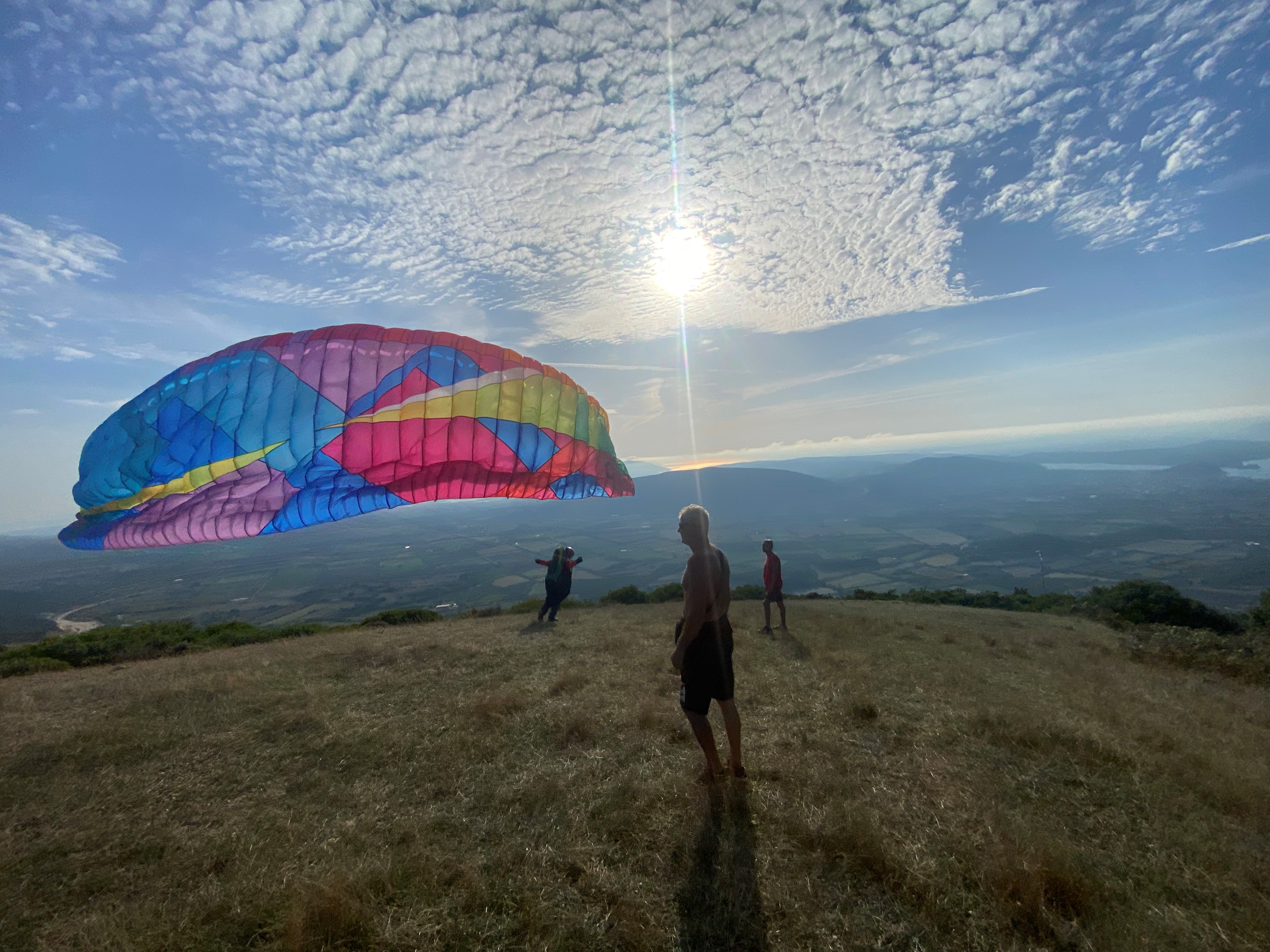
Things are simpler than they seem!
First of all, we can safely start our flight when the wind is blowing against the takeoff area, in the direction we want to take off. When, for example, the takeoff direction is westward, we need a westerly wind. We always characterize the wind by the area it comes from. When we say westerly wind, it means that it comes from the west, and so on. The reason we want to have a headwind during takeoff is because the wing needs to reach a minimum speed in order to offset the total weight it has to lift so that it can take off.
This minimum speed ranges from approximately 10 km/h to 15 km/h, depending on the load (a heavier load requires a higher speed). If, for example, it needs 12 km with the load it is carrying, the wing to be able to offset the weight, and the wind at takeoff is 10, I will need to run two extra kilometers to reach 12 in order to take off. If, for example, the intensity is already 12 km, I will only need one step , and I will already be flying. If I have no air at all, then I will have to run at 12 km. But do I have enough space to run to reach that speed? Theoretically and practically, I can take off when I have enough space to run, and of course I can reach that speed by running. So, this is where judgment comes in. Also, the maximum wind speed at which a conventional wing can safely take off is 25 km/h. This is a very simplistic introduction, without many details, to help us understand the initial conditions required to start a flight.
Let's take a very simplistic look at a few things about how weather is created!
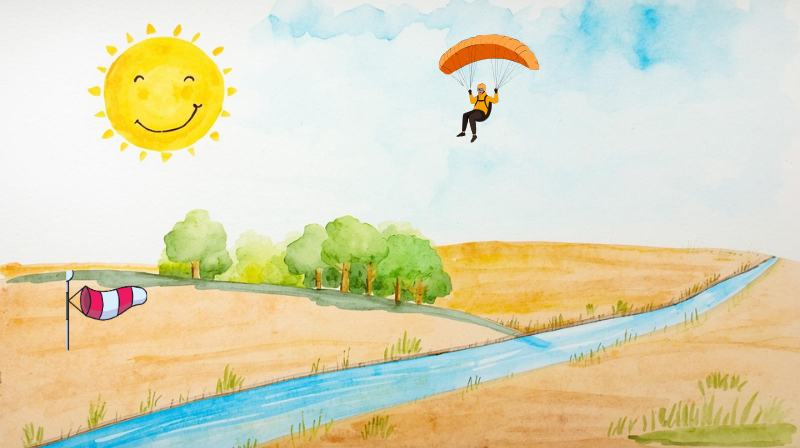
The sun is what creates the weather. First, it warms the earth with its rays, which collect energy from them, and release it in the form of heat. However, the earth's surface is not uniform; its soil has different compositions, such as dark and light-colored areas, as well as spots with different soil compositions. And areas that are also better exposed to the sun. These factors cause it to absorb, and release heat differently in each part. So we don't have the same temperature everywhere. Therefore, we could describe the sun as the fuel of the weather. As we said, the earth is heated by the sun, causing its temperature to rise. As we move away from the earth for this reason, towards the sky, the temperature decreases roughly by 1 degree Celsius per 100 meters for the first 1,500 meters. That is why, when we are about to fly high with a paraglider, we need to dress warmer to protect ourselves from the colder temperatures we will encounter as we gain altitude. Also, the temperature that the earth gives off when there is moisture in the surrounding area at the same time raises it. Where the temperature drops significantly at a certain height, this transported moisture forms clouds. This is the mechanism by which clouds are created. These upward thermal currents that raise humidity and create clouds are called thermals. By staying within them and circling, paragliders gain altitude. Just like birds do!
How is wind created?
Wind is created by the difference in temperature between one area and another. To understand this, let's think about something that is much more familiar to everyone. And that is how heating works in a room. For example, a radiator emits heat. Warm air is lighter than cold air, so it rises to the ceiling. While cold is indeed heavier, it takes its place. Another example is when we open a window in a room, creating a draft, cold outside air enters the room, displacing the warm air. This is how wind works: colder, denser air tends to take the place of warm air, displacing it.
Local breezes and general wind!
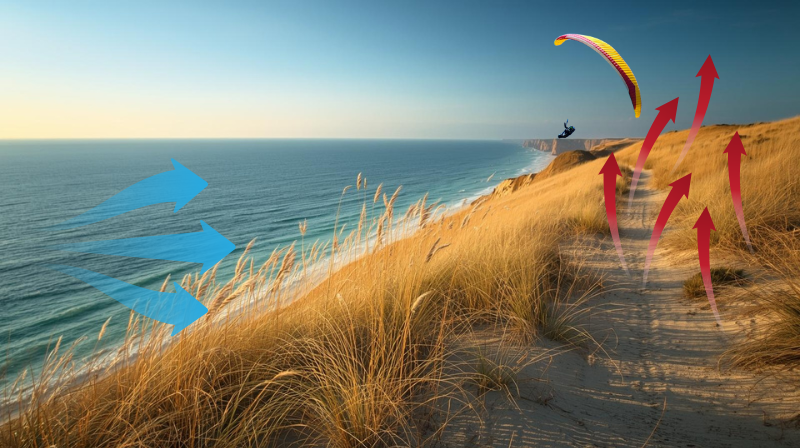
There are two types of winds: local breezes and general winds. The mechanism that creates them is the same, namely the difference in temperature from one area to another. The differences between them are that a breeze is a local wind that prevails within the boundaries of a small area and is close to the ground. Whereas a general wind is a wind that blows from one wider area to another, and generally blows at higher altitudes. An example of a local wind is the sea breeze that blows during the day. This is because land is warmer than sea, so we have wind blowing from the sea towards the land. The greater the temperature difference between the two, the stronger the wind. This usually happens at midday, when the sun is at its warmest. The usual wind speeds are 20 to 30 km/h. Local breezes also occur inland, such as the wind that can blow from a valley towards the mountains .
Thunderclouds
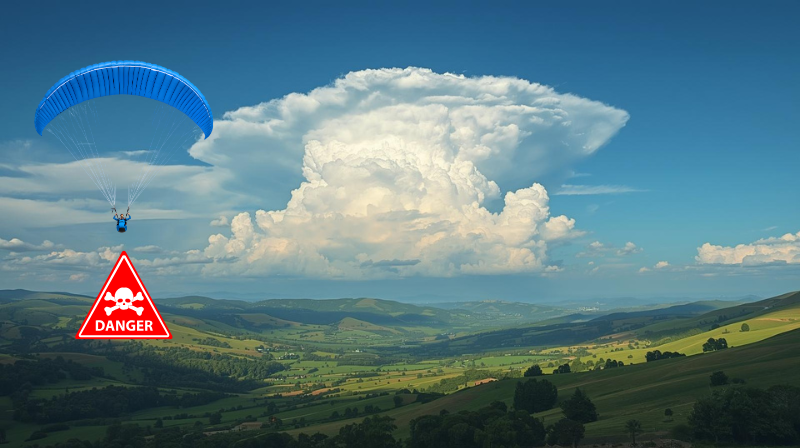
The moist air that rises with the thermal currents in the sky, in some cases when this occurs very intensely, and under certain conditions, creates huge clouds called thunderclouds, (cumulonimbus). These create storms, which are responsible for heavy rain, hail, lightning, and strong winds due to their intense release of energy. A storm is a purely local phenomenon and usually occurs in a limited area. It is short-lived but intense. It is easy to locate and recognize because these clouds are enormous, and from a distance they resemble the shape of a giant cauliflower. Sometimes their peaks resemble the shape of the anvils used by blacksmiths in the past. When there is a possibility of a storm developing in an area,it goes without saying that we should not fly because it is particularly dangerous.
Conclusion
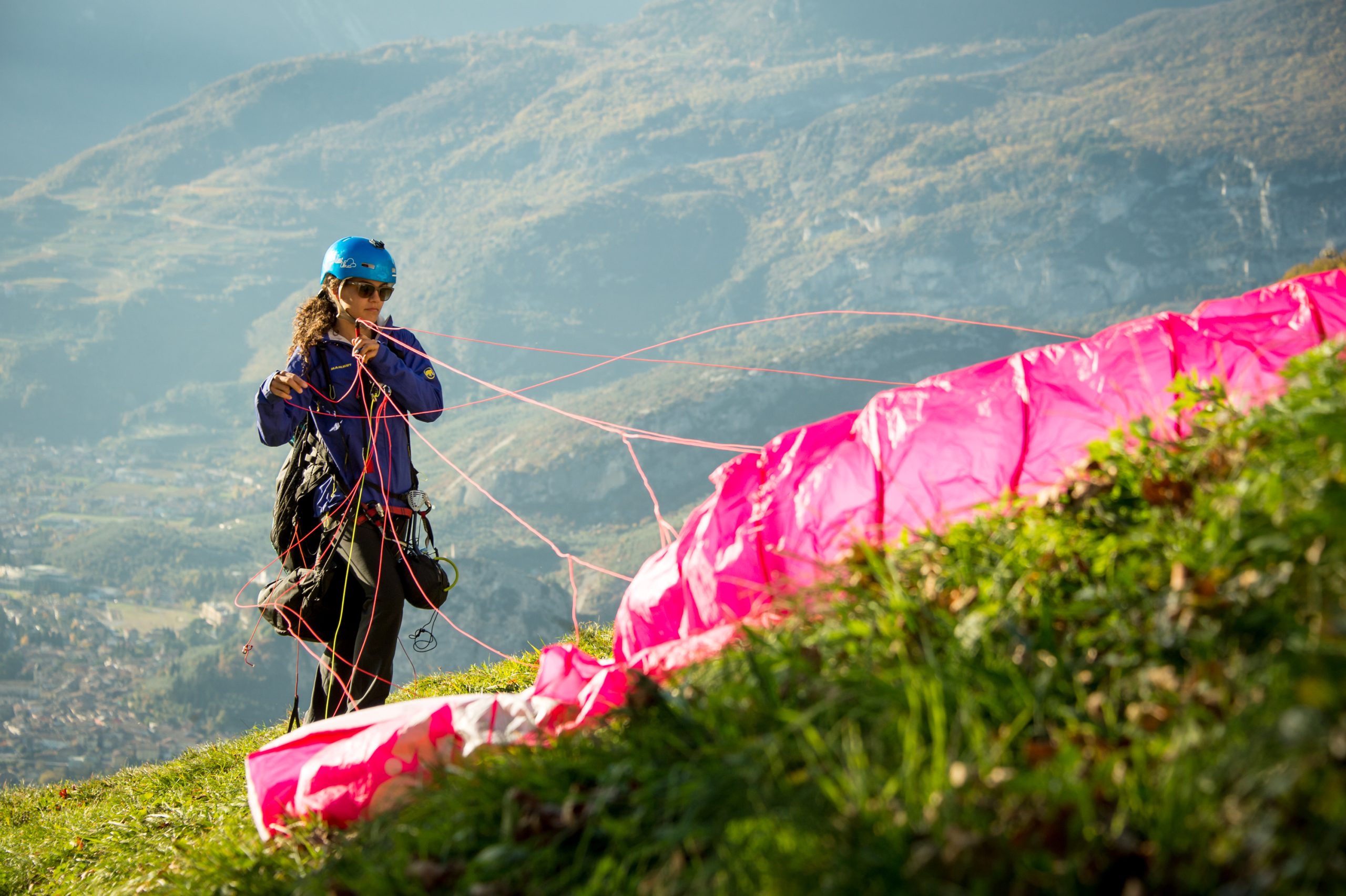
Paragliding is a sport that offers intense, and beautiful experiences. All you need to do is respect the safety rules that govern it. These are so simple that anyone can follow them. A key part of these rules, is the one that has to do with the weather. I hope that by reading the above simplistic text, I have answered some general questions you may have had. And even better, I hope I have sparked the curiosity of some of you to try to find more information about the weather, and deepen your knowledge in the future.


.jpg.webp)
.webp)
.webp)
.webp)
.webp)
.webp)

.svg)


.png)
